Field note / premium seating
How to Judge Premium Synchronized Tilt Without Shopping by Spec Sheet
Last updated:
Synchronized tilt describes coordinated seat and back movement, but the feel and adjustment range vary between chairs. Check tension controls, recline stops, seat depth, and how well your feet stay supported through movement. Premium upholstery or styling does not establish a good fit. Compare the published dimensions with your body and workspace, and review return arrangements if you cannot assess the chair in person before purchase.
This field note is a decision framework, not a ranking or a claim of individual product testing. It asks the reader to observe ordinary movement, compare current documentation, and preserve unanswered questions until they can be verified in the workspace where the chair will be used. It also separates a temporary first impression from evidence gathered during an ordinary task, where the desk, screen, feet, arms, and movement path can all change what a chair needs to do.
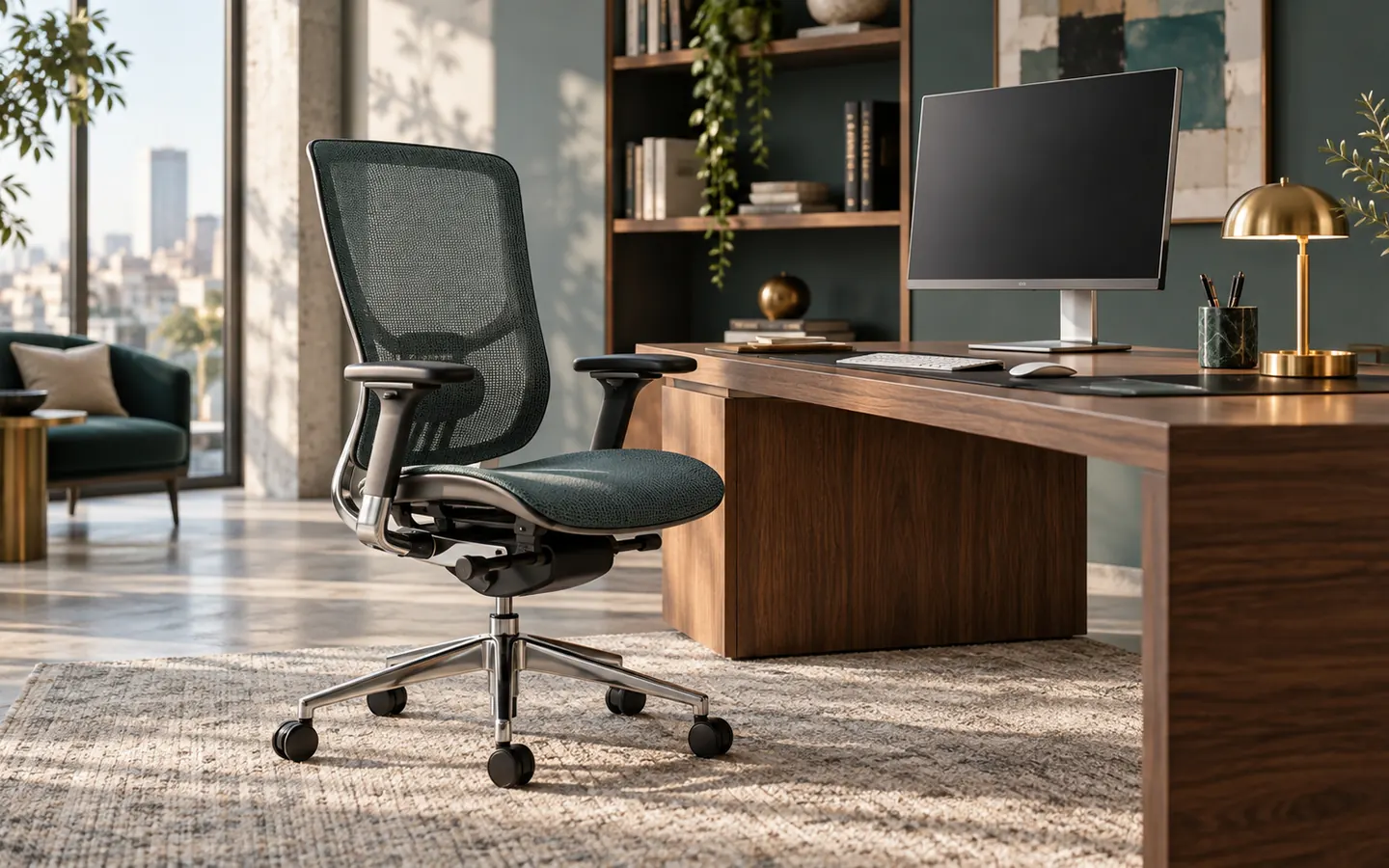
Before comparing models, make a small map of the current workspace. Note the desk height, the distance from the seat to the keyboard, the monitor arrangement, any drawer rail under the work surface, and the area needed to roll in and stand up. These details are not secondary to a chair mechanism. They decide whether a setting that feels acceptable in a retail environment can be repeated in the place where concentration, calls, paperwork, and short breaks occur.
Then describe one ordinary work block rather than an idealized day. Some people alternate between keyboard work and reading. Others reach repeatedly for paper, use a compact desk, share the chair, or change between focused and conversational tasks. The purpose of this description is not to diagnose posture. It is to identify the transitions a chair should make easier and the fixed constraints that no adjustment lever can erase.
Keep the observation modest. Record how the feet meet the floor, where the seat edge contacts the legs, whether the lower back has a gentle support point, and how the shoulders behave at the keyboard. After a short task, change only one setting and repeat the same observation. This gives a reader a useful comparison language: what became more stable, what became restricted, and what remains uncertain without a longer trial or current product documentation.
Finally, separate preference from evidence without dismissing either. A finish, silhouette, or deep recline can matter to a buyer, but it should sit beside fit range, desk clearance, service information, and movement behavior. A written record does not turn comfort into a score. It prevents the most memorable feature from quietly replacing the conditions that will shape a chair’s daily use.
Use the record during a pause in the decision rather than only at the end. When a product page, a seller discussion, or a brief in-person try introduces a new claim, add the claim beside the condition it is supposed to improve. Does the stated range alter seat depth, arm clearance, back contact, or motion at the desk? Does a warranty statement identify a service route? This habit keeps the research open to useful evidence while resisting the pressure to treat every premium feature as equally relevant.
01
Start with a motion question, not a product label
A premium office chair is easier to judge when the question is about the workday: what posture changes occur, which ones feel supported, and which are being avoided because the chair makes them awkward?
For a current product-focused reference, consult this list of premium office chairs with synchronized tilt mechanisms. Use it as a starting point for names and features, then return to your own desk, body dimensions, and task pattern.
This journal does not claim private product testing. The methods below are reader-run observations: compare documented adjustment ranges, test an available chair responsibly, and keep notes about what changes rather than searching for a universal winner.
A useful first pass leaves room for uncertainty. The reader should leave with named questions about fit and motion, not an implied promise that a premium label can settle them. In the record for start with a motion question, not a product label, place that observation beside the specific desk, task, and setting used to collect it; a feature is only meaningful when the comparison conditions are visible to the person making the final choice.
02
Separate synchronized tilt from a dramatic recline
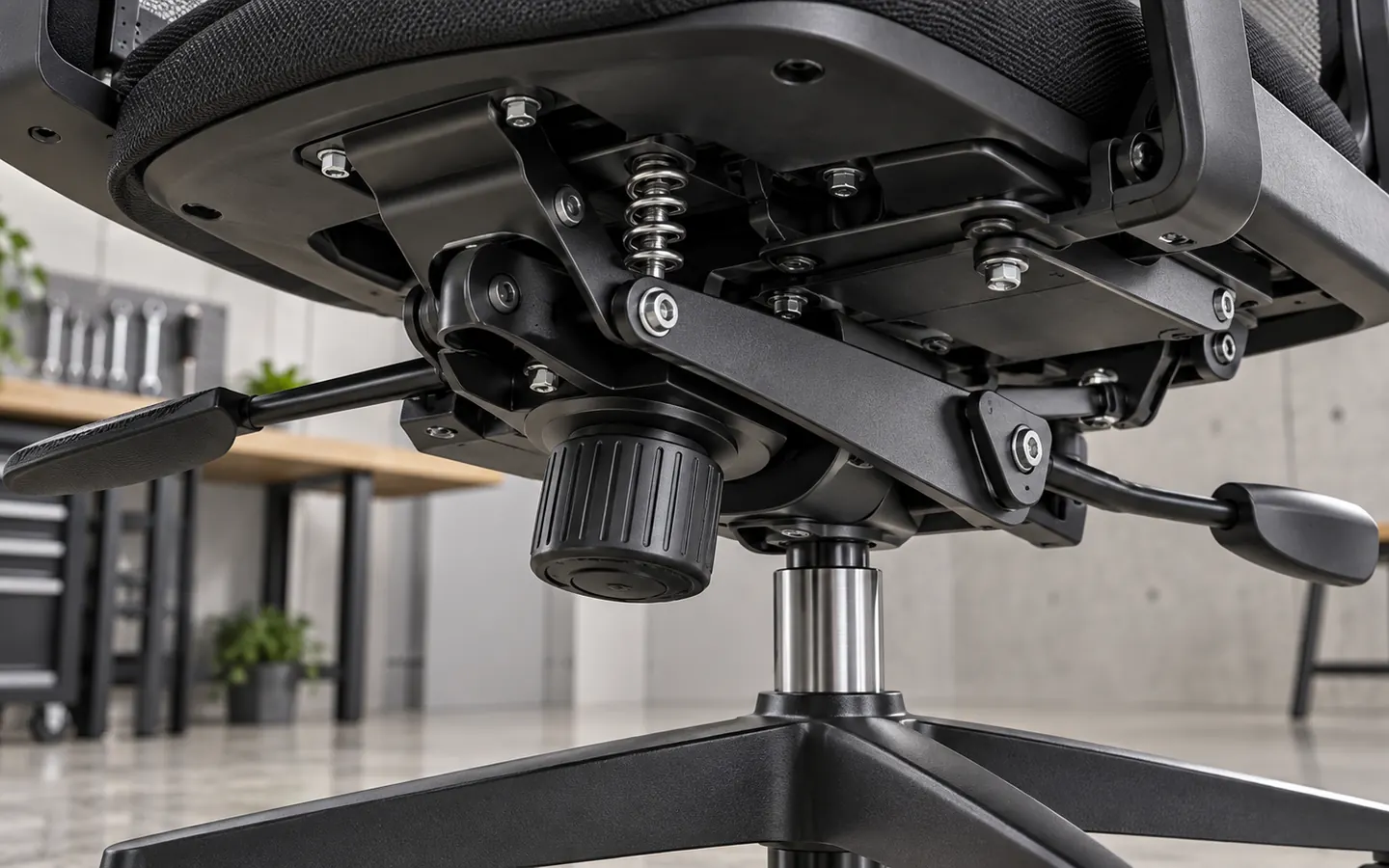
Synchronized tilt describes a coordinated movement between the backrest and seat. Its practical value is not the mechanism label alone; it is whether a modest change opens the torso-to-thigh angle while the feet, seat contact, and desk relationship remain usable.
A chair can advertise a ratio and still feel wrong because its pivot point, seat slide, back contour, or tension range does not match the person using it. Those parts must be read together.
Start with a stable work posture, then make a small change and return. A useful mechanism makes the route between positions predictable rather than turning every lean into a commitment.
The mechanism matters when it provides a repeatable transition that the reader will actually use between tasks, calls, reading, and focused input. In the record for separate synchronized tilt from a dramatic recline, place that observation beside the specific desk, task, and setting used to collect it; a feature is only meaningful when the comparison conditions are visible to the person making the final choice.
03
Map body geometry before shopping features
Seat height, usable seat depth, lumbar placement, upper-back contour, and armrest clearance form a working map. None needs laboratory precision, but each benefits from a repeatable observation in the actual workspace.
Keep feet supported, let the pelvis reach the backrest without force, and check that the seat edge does not crowd behind the knees. Then look at the monitor and keyboard reach, because body fit can be disrupted by desk geometry.
Write down the range that works rather than a single ideal number. A useful premium chair has enough adjustment range to reproduce the relationship, not merely an impressive list of controls.
A written range is more useful than a heroic posture. It captures the ordinary room needed for feet, thighs, back contact, and arm movement. In the record for map body geometry before shopping features, place that observation beside the specific desk, task, and setting used to collect it; a feature is only meaningful when the comparison conditions are visible to the person making the final choice.
04
Set tension and recline range in a calm sequence
Set tilt tension from the posture used for ordinary typing. The backrest should move when intentionally invited, but it should not drift away whenever the shoulders settle.
Choose an upright or middle stop for a specific task, then use the chair for several minutes. Change one control at a time so a tension change is not confused with a lumbar or depth change.
Test the return toward the desk. If the chair throws the body forward, unloads the feet, or loses lower-back contact, the setting is not yet an everyday setting even if deep recline looked impressive.
A setting is trustworthy only after it survives a return to the desk. Motion should support attention rather than repeatedly demand it. In the record for set tension and recline range in a calm sequence, place that observation beside the specific desk, task, and setting used to collect it; a feature is only meaningful when the comparison conditions are visible to the person making the final choice.
05
Compare evidence instead of feature counts
Feature lists are useful for sorting but weak for deciding. The comparison below turns broad categories into observations a reader can collect from documentation, a responsible in-person trial, or an authorized seller conversation.
A blank or unavailable detail is information. It may mean a question requires direct clarification rather than a positive assumption based on price or finish.
Avoid reducing the comparison to a score. A chair whose movement is appealing but whose arms collide with the desk can lose to a less elaborate model that supports the whole working arrangement.
The comparison is deliberately open-ended: documented detail, absent information, and observed behavior all deserve a place in the decision. In the record for compare evidence instead of feature counts, place that observation beside the specific desk, task, and setting used to collect it; a feature is only meaningful when the comparison conditions are visible to the person making the final choice.
| Decision area | Evidence to collect | Question to keep open |
|---|---|---|
| Seat and back fit | Usable depth, lumbar range, and shoulder movement at the desk | Can this range reproduce the body-and-desk relationship that works? |
| Coordinated tilt | Tension behavior, recline stops, foot contact, and return path | Does motion remain deliberate through ordinary task changes? |
| Arm clearance | Desk underside height, pad range, reach path, and approach test | Do the arms support rest without blocking work? |
| Contact surface | Edge feel, climate, clothing, care instructions, and long-block notes | What will change after the first impression? |
| Ownership | Warranty detail, parts route, records, and authorized service information | Can a small fault be handled without losing a good fit? |
06
Let the desk participate in the fitting
The desk is not background scenery. Its underside, keyboard position, monitor height, drawer rails, and rolling clearance decide whether the chair can approach the work without awkward shoulder elevation or repeated armrest collisions.
Check approach and exit at the task height. A chair that fits only when lowered away from the keyboard is not solving the actual problem.
If the desk is fixed, record its limits first. That record makes it easier to identify when a lower-profile armrest, a different monitor arrangement, or a different chair geometry is needed.
Desk constraints are not a failure of the chair or the reader. They are part of the system that determines whether an adjustment can be used. In the record for let the desk participate in the fitting, place that observation beside the specific desk, task, and setting used to collect it; a feature is only meaningful when the comparison conditions are visible to the person making the final choice.
07
Use contact surfaces as changing conditions
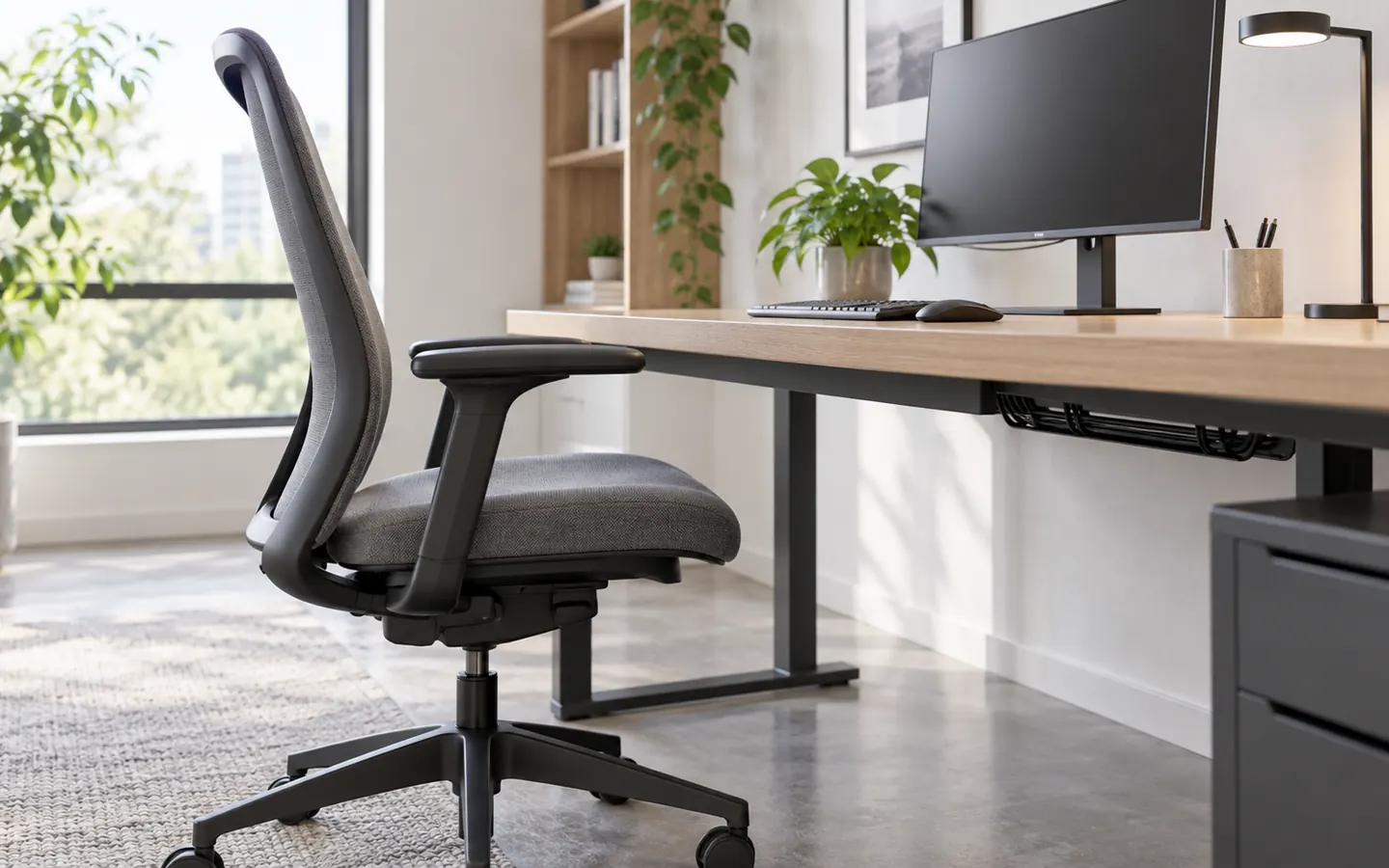
Mesh, foam, fabric, and leather-like finishes should be judged over temperature, clothing, movement, and time. The first touch of a cushion does not describe what it will do through a long editing session or a warm afternoon.
Look at the edges and transitions as carefully as the center: a firm rim, seam, or frame can define comfort more than the material category in a sales description.
Care instructions and replacement-part availability belong here too. A surface is a long-term decision when it can be cleaned, repaired, or replaced without changing the chair’s fit.
Material choice becomes clearer when the reader records how a surface behaves in their climate and clothing rather than relying on a category name. In the record for use contact surfaces as changing conditions, place that observation beside the specific desk, task, and setting used to collect it; a feature is only meaningful when the comparison conditions are visible to the person making the final choice.
08
Decide with a short, written record
After an ordinary work block, record what was adjusted, what task was happening, and what changed in the legs, lower back, shoulders, and reach. Short notes are more reliable than a final showroom impression.
A premium purchase earns its place when its fitting range, motion, desk integration, and service evidence work together. One striking control cannot compensate for a missing adjustment elsewhere.
Use the checklist below before deciding. It is a way to make uncertainty visible, not a claim that comfort can be guaranteed by a template.
The final record should identify what is known, what is still untested, and which questions must be verified through current authorized information. In the record for decide with a short, written record, place that observation beside the specific desk, task, and setting used to collect it; a feature is only meaningful when the comparison conditions are visible to the person making the final choice.
A short decision record
- Feet, seat depth, lumbar contact, and shoulder movement remain workable during normal tasks.
- Tilt tension and recline range support small changes without drifting or launching the body forward.
- Armrests approach the desk cleanly and do not force a shrug, collision, or shortened reach.
- Contact surfaces have been considered across time, clothing, climate, and care needs.
- Warranty and replacement information describe a credible ownership path.
- Uncertain points are written down before price or appearance decides the outcome.
Arrange Monitor and Printer Storage Separately
Chair movement and desktop equipment storage solve different setup problems. The next guide examines monitor risers with printer storage shelves, where dimensions, load limits, and access matter.